
Enneagram Type 2 at a Glance
Quick answer: Enneagram Type 2 is the type most associated with warmth, generosity, emotional attentiveness, and the desire to feel loved and needed.
Enneagram Type 2, often called The Helper or The Giver, is typically associated with care, generosity, people-focus, and a strong desire to support others and build close emotional bonds.
Also called The Helper, The Giver Core desire To be loved, wanted, and deeply appreciated Core fear Being unwanted, unlovable, or emotionally rejected At their best Warm, generous, emotionally intuitive, supportive, and deeply caring Under stress People-pleasing, overinvolved, resentful, possessive, or neglectful of their own needs Often focused on Relationships, approval, emotional connection, giving, and being needed
Common traits of Enneagram Type 2
- Highly attuned to other people’s feelings and needs
- Often generous, affectionate, and quick to offer support
- May struggle to identify or prioritize their own needs
- Often hopes that giving love will create closeness, appreciation, or security
Want to see whether you actually fit this pattern?
Take the Enneagram testOr explore all 9 Enneagram types.
How to read this profile
This profile summarizes Enneagram tradition, not a clinically validated category. A systematic review found mixed evidence across Enneagram studies and measures. Use the descriptions as hypotheses about present behavior, not proof of childhood wounds, compatibility, career fit or another person's inner motives.
Enneagram Type 2 is the personality type organized around love - giving it, earning it, and quietly, urgently needing it back. Known as The Helper, Type 2s are warm, generous, perceptive people who seem to instinctively know what everyone around them needs, and who derive their deepest sense of self from being needed in return. The core desire of a Two is to be loved and wanted. The core fear, which drives the whole pattern, is being unwanted, unloved, or dispensable - the person that, once they stop helping, nobody particularly needs to keep around.
What makes Enneagram Type 2 tick
Some Enneagram teachers interpret Type 2 through a sensitivity to conditional love and the belief that care must be earned through usefulness. That story may fit some readers, but a type cannot reveal anyone's childhood or prove why they help. A more grounded question is whether giving remains freely chosen, reciprocal and connected to clearly stated needs.
The helping is real. The warmth is genuine. But beneath it is a negotiation so old and so automatic that most Twos do not recognize it as a negotiation at all. What makes Type 2 particularly complex, and particularly sympathetic, is that they genuinely do not experience their giving as transactional. They experience it as love. The expectation of reciprocity is buried so deeply under the authentic desire to care that it surfaces instead as hurt feelings, resentment, and a vague sense of exhaustion - the sensation of having given everything and somehow still not being quite enough.
Core fear and core desire
The core fear of Type 2 is being unwanted. Not unloved in the abstract, but specifically surplus to requirements - the friend who is never called first, the partner whose absence would not particularly be noticed, the person who, once they stop being useful, disappears from people's attention. This fear is rarely conscious. It tends to express itself as helpfulness rather than anxiety, as warmth rather than need, as interest in others rather than terror about being overlooked. The core desire is to be truly and unconditionally loved - to know that someone wants them in the room not because of what they do but because of who they are. Most Twos are, quietly, still waiting for this. The work of growth for a Two is learning to believe it might be possible without having to earn it first.
Key traits of Enneagram Type 2
Type 2s are warm, intuitive, and genuinely other-oriented in a way that is not performance. They tend to remember birthdays, notice when something is wrong before anyone has said anything, and show up with exactly the right thing at exactly the right moment. They are good at relationships in the active, effortful sense - they invest in people, they follow up, they make the people around them feel seen and chosen and cared for. In a world that is frequently indifferent, being loved by a Two is a specific and valuable thing.
The shadow side is what happens when the giving becomes entangled with the needing. At their less healthy, Twos can become manipulative in ways that are almost invisible - to others and to themselves. The help that is offered is real, but so is the unspoken ledger. Twos can become possessive, can struggle to let people be self-sufficient, can take an almost proprietary interest in the people they care for. They can also become flattering and shape-shifting, intuitively presenting whichever version of themselves they sense will be most welcome - not out of cynicism but out of a deeply conditioned belief that who they actually are might not be quite enough to hold people's attention without augmentation.
Enneagram Type 2 in relationships
Being in a relationship with a healthy Type 2 is, genuinely, one of the more nourishing experiences available. They are attentive, generous, emotionally fluent, and deeply committed to the people they have decided to love. They remember. They show up. They make the relationship feel like something someone is actively tending rather than just occupying. What makes relationships harder for Twos is the difficulty of receiving.
Asking for what they need directly - without packaging it as concern for the other person, without softening it into something that sounds more like giving than asking - can feel almost physically uncomfortable for a Two. The result is that their needs often go unnamed until they become resentments, and partners who are not paying close attention can find themselves on the wrong end of a significant emotional withdrawal with very little visible warning. The relationship pattern worth watching for a Two is the tendency to select partners and friends who need rescuing, or who are in some way unavailable, because unavailability provides a structure within which the giving never quite reaches completion and the question of whether they are truly loved never quite has to be answered.
A partner who is straightforwardly available, healthy, and capable of reciprocating is, paradoxically, harder for an unhealthy Two to stay with than a partner who perpetually needs more than they can give. The most illuminating comparisons are with Enneagram Type 1 and Enneagram Type 9. Ones and Twos can look similar from the outside - both conscientious, both caring, both often found doing things for other people - but the motivation is different: the One is doing the right thing, the Two is building the relationship.
With Type 9, there is shared warmth and a desire to maintain harmony, but where the Nine withdraws from conflict to preserve peace, the Two tends to insert themselves more actively into others' emotional lives. The Enneagram stress pattern in love is worth reading for anyone trying to understand how Two dynamics play out across a longer relationship arc.
Enneagram Type 2 under stress and in growth
Under stress, Type 2 moves toward the less healthy characteristics of Type 8. This is one of the more dramatic stress moves in the system. The person who has been accommodating, giving, and warm suddenly becomes aggressive, controlling, and confrontational - surprising everyone, possibly including themselves. The Two who has been quietly accumulating a sense of being taken for granted eventually runs out of runway, and what comes out is not a polite request for reciprocity but something much closer to rage. This is the Two who finally says what they have needed for years, but says it badly and at the wrong moment, and then has to live with the fallout.
In growth, Type 2 moves toward the healthy qualities of Type 4: genuine self-awareness, the capacity for introspection, and - crucially - the ability to say what they actually feel and want without framing it in terms of someone else's needs. A Two who is genuinely growing has learned that their own interiority is interesting and worth attending to, that having needs is not a character flaw, and that being loved for who they are rather than what they do is not only possible but is, in fact, the whole point.
Enneagram Type 2 wings: 2w1 vs 2w3
A Type 2 with a One wing (2w1) brings a more principled, earnest quality to the Helper pattern. The 2w1 tends to help because it is the right thing to do as much as because it earns love - they have a stronger sense of moral duty and are more likely to help impersonally, through causes and structures, rather than purely through personal relationships. They can also be more self-critical than the core Two, the One's inner critic adding a layer of guilt about whether they are giving enough or in the right ways.
A Type 2 with a Three wing (2w3) is more image-conscious, more energetic, and more socially ambitious. The 2w3 tends to present their helpfulness in a way that is also visible - they want to be seen as generous, beloved, and indispensable. They are often charming and socially adroit in a way that the 2w1 is not, and they are more prone to the shape-shifting tendency, presenting different facets of themselves to different people with considerable ease.
Common mistypes for Enneagram Type 2
Type 2 is most commonly confused with Type 9 and Type 6. The confusion with Nine comes from shared warmth and a tendency to prioritize relationships. The difference is that Nines are fundamentally motivated by maintaining inner peace and tend toward withdrawal, while Twos are fundamentally motivated by connection and tend toward insertion into others' lives. A Nine will let things slide to keep the peace.
A Two will involve themselves to strengthen the bond. The confusion with Six comes from shared loyalty and attentiveness. But Sixes are oriented toward security and are alert to threat, while Twos are oriented toward love and are alert to need. A Six checks whether the relationship is safe. A Two checks whether they are still wanted. Type 2 is also one of the most culturally complicated types for women specifically.
The overlap between the Two pattern and the cultural script for femininity - caring, self-effacing, attuned to others, finding meaning through relationships - means that many women score as Two simply because they have been socialized into Two-adjacent behaviors, while their actual type may be quite different. This is worth bearing in mind when reading these descriptions, and it is one of the stronger reasons to use a properly constructed test rather than self-identifying from a description alone.
If you want to check your actual type, the Psychdom Enneagram test is the right place to start.
Take the Enneagram testBest careers for Enneagram Type 2
No career is prescribed by an Enneagram type. The possibilities below reflect themes in Enneagram writing, not evidence that people of one type are disproportionately represented in, or better suited to, particular professions. Interests, skills, opportunity, values and working conditions are more useful career evidence.
Type 2s are drawn to roles where the relational dimension is central and where the human impact of their work is visible. Healthcare, teaching, counseling, social work, HR, and the charitable sector tend to attract disproportionate numbers of Twos.
They make excellent therapists, nurses, teachers, and advocates - roles where the ability to read what someone needs and respond warmly and accurately is not incidental but core. What tends to exhaust them is work that is purely transactional, impersonal, or metrics-driven without a visible human dimension. A Two who cannot see the face of the person they are helping will often struggle to sustain motivation, and a Two in a competitive, individualistic environment may find the culture so antithetical to their values that the work becomes draining rather than energizing.
The career danger for Twos is over-extension: taking on too many people, too many problems, and too much emotional labor without adequate reciprocity or rest. The healthcare worker who burns out, the therapist who loses their boundaries, the manager who cannot say no to a direct report's personal crisis at ten o'clock on a Friday evening - these are not stereotypes but recognizable patterns. Type 2s are frequently the people organizations exploit precisely because their self-worth is so tied to being needed that saying no feels like professional and personal failure simultaneously.
Famous people often typed as Enneagram Type 2
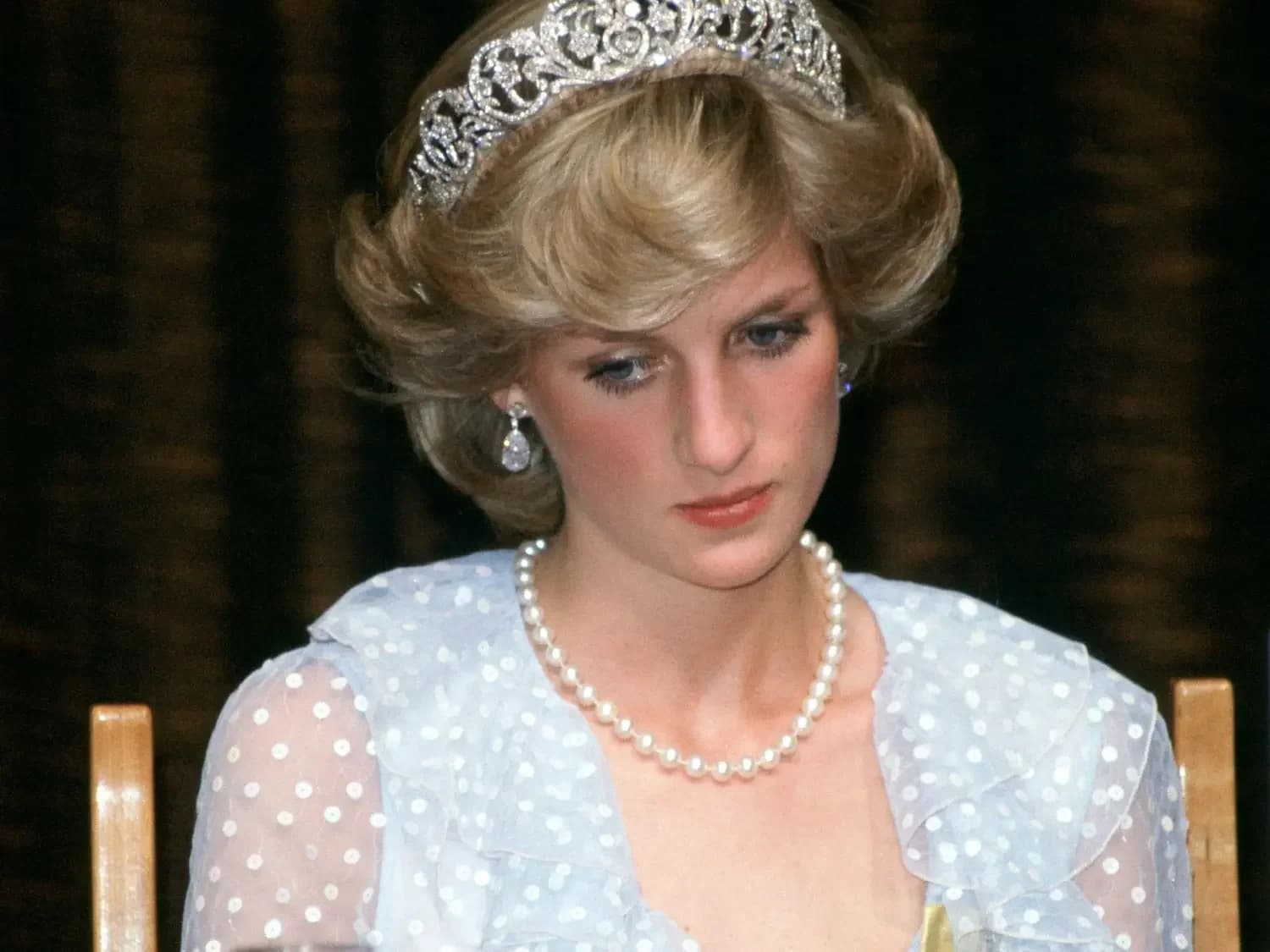
Princess Diana is perhaps the most widely cited example of the Type 2 pattern in public life - the instinctive warmth with strangers, the ability to make individuals in a crowd feel specifically seen, the genuine compassion that ran alongside a deeply complicated private need for love and validation. Her famous statement that she wanted to be a queen in people's hearts rather than a formal royal captures something precise about the Two's orientation: the desire not for status but for love, and specifically for the freely given, unconditional kind.
Other public figures often typed as Type 2 include Dolly Parton, Desmond Tutu, and Monica from Friends - a fictional example, but one whose pattern is drawn with enough consistency to be useful. The usual caveats apply: public persona is not the same as Enneagram type, and these are observations rather than diagnoses.
How Enneagram Type 2 compares to nearby types
For the full picture of where Type 2 sits in the system, the Psychdom guide to all nine Enneagram types is the best starting point. The quick reference guide is useful for a faster comparative read. Type 2 is most usefully compared with Enneagram Type 1 and Enneagram Type 3. With One, the shared conscientiousness can look identical from the outside, but the animating force is different - One is doing it because it is right, Two is doing it because it builds the relationship. With Three, both types are socially skilled and image-aware, but Three shapes their image around success and achievement while Two shapes theirs around being loved and needed. Both are in the heart triad, which means both types are dealing fundamentally with questions of identity, emotion, and image - just from different angles.
Frequently asked questions about Enneagram Type 2
Are Type 2s manipulative?
Not intentionally, and most Twos would be genuinely distressed at the suggestion. But at their less healthy, Twos can engage in emotional manipulation that is invisible to themselves - giving in ways that create obligation, flattering to secure attachment, and withdrawing warmth as punishment for not being sufficiently appreciated. The manipulation is real even when the intent is love.
Why do Type 2s struggle to ask for help?
Because asking directly for what they need requires believing they are worth caring for independent of what they offer - and for a Two whose self-worth is built on being useful and giving, this belief is often genuinely unavailable. Asking for help feels like revealing that they are not enough on their own, which is precisely the thing they fear most.
What is the difference between a Type 2 and someone who is simply kind?
Kindness is a behavior. Type 2 is a motivational structure. A genuinely kind person can be any type. What distinguishes a Two is the relationship between the giving and the self-worth: for a Two, being helpful is not just something they do, it is the primary way they justify their right to be loved.
Do Type 2s know they are doing this?
Rarely, and this is the heart of the pattern. The self-awareness grows with development. A healthy, worked-on Two can name the pattern clearly. An average Two is often genuinely convinced that their primary concern is everyone else's well-being, and that any hurt feelings they experience are simply the cost of being the person who cares most.
What does a healthy Type 2 look like?
Someone who gives freely because they want to, not because they are afraid of what happens if they stop. Someone who can receive as gracefully as they give. Someone who has found a way to believe that they are worth loving not because of what they do but because of who they are - and who has stopped needing to test this theory quite so constantly.