
Enneagram Type 9 at a Glance
Quick answer: Enneagram Type 9 is the type most associated with calm, steadiness, harmony, and the desire to keep inner and outer peace.
Enneagram Type 9, often called The Peacemaker or The Mediator, is typically associated with patience, acceptance, emotional steadiness, and a strong desire to avoid conflict and maintain connection.
Also called The Peacemaker, The Mediator Core desire To feel peaceful, connected, and internally settled Core fear Loss, conflict, disconnection, or being overlooked and unimportant At their best Grounded, accepting, reassuring, patient, and quietly strong Under stress Checked out, passive, stubborn, avoidant, and disconnected from priorities Often focused on Harmony, comfort, stability, connection, routine, and keeping the peace
Common traits of Enneagram Type 9
- Often calm, agreeable, and easy to be around
- Strongly values peace, comfort, and emotional steadiness
- May minimize their own needs to avoid tension or disruption
- Often brings patience, balance, and quiet support to relationships and groups
Want to see whether you actually fit this pattern?
Take the Enneagram testOr explore all 9 Enneagram types.
How to read this profile
This profile summarizes Enneagram tradition, not a clinically validated category. A systematic review found mixed evidence across Enneagram studies and measures. Use the descriptions as hypotheses about present behavior, not proof of childhood wounds, compatibility, career fit or another person's inner motives.
Enneagram Type 9 is the personality type organized around peace, harmony, and the deep, persistent need to avoid conflict and fragmentation - both in the world around them and in their own interior. Known as The Peacemaker, Type 9s are accepting, patient, and genuinely easy to be with - people who have an almost instinctive ability to see every side of a situation, to make others feel heard and included, and to hold a room together simply by being present in it. The core desire of a Nine is inner stability and peace of mind - to feel settled, connected, and undisturbed. The core fear is loss and separation - being cut off from the people and the sense of wholeness that make life feel like something worth inhabiting.
What makes Enneagram Type 9 tick
Some Enneagram teachers interpret Type 9 through feeling overlooked or learning that preferences create conflict. That story may fit some readers, but a type cannot establish childhood experience or explain every form of conflict avoidance. A more grounded question is whether maintaining peace still leaves room for voice, boundaries and engaged disagreement.
What makes this wound particularly difficult to see from the outside is that Nines are genuinely pleasant to be around. The accommodation looks like generosity. The going-along looks like easygoing temperament. The absence of visible need looks like self-sufficiency. It takes sustained attention to notice that the person who is so good at making everyone else comfortable has very little practice being comfortable themselves, and has often forgotten - or never quite learned - what their own preferences actually are.
Core fear and core desire
The core fear of Type 9 is separation and loss - being cut off from connection, from the sense of belonging, from the inner peace that only exists when the external world is not requiring them to fight for anything. This fear tends to express itself not as visible distress but as a gradual merging with whatever or whoever is in front of them - adopting the priorities of the people they love, absorbing the mood of the room, going along with the plan not because they have evaluated it and found it good but because disagreeing would require a kind of self-assertion that feels more costly than the plan itself.
The core desire is peace - not the absence of all difficulty, but a deep, internal settledness that does not depend on external conditions. Most Nines pursue this by minimizing friction, which works in the short term and accumulates, over time, into a life that has been shaped almost entirely by other people's preferences. The work of growth for a Nine is discovering that the peace they have been protecting by disappearing is not actually available through disappearance - that real peace requires presence, including the presence of their own desires and voice.
Key traits of Enneagram Type 9
Type 9s are receptive, steady, and genuinely easy to be close to. They tend to be the person in a group who everyone feels comfortable around - not because they are performing warmth but because they are, in a quiet and consistent way, actually interested in the people in front of them and actually capable of holding space without needing it to be about them. They are good listeners in the real sense - not waiting for their turn to speak but actually tracking what you are saying and what it might mean for you.
They also tend to have a quality of groundedness that other types often find deeply stabilizing - a capacity for equanimity in situations that would produce visible anxiety in a Six or visible intensity in a Four. This is one of the Nine's genuine gifts and also, at its less helpful, a form of avoidance - the calm that comes not from having processed the difficult thing but from having set it aside so completely that even the Nine is not entirely sure it is still there.
The shadow side is the disappearing act. At their less healthy, Nines can become so merged with the people and environments around them that they lose contact with their own perspective, their own desires, and their own sense of what they actually want their life to be. They can become passive in ways that look like contentment from the outside and feel, from the inside, like a persistent, low-grade numbness. They can also - and this tends to surprise the people who have only seen the accommodating surface - become quietly and comprehensively stubborn, using inertia as the one form of autonomy available to someone who has given everything else away.
Enneagram Type 9 in relationships
Being in a relationship with a healthy Type 9 is one of the more nourishing experiences available. They are warm, accepting, and genuinely interested in the person they are with - not in the Two's need-driven way but in a quieter, more spacious way that makes the other person feel that they can be whatever they are without immediate judgment or demand. A Nine will not require you to be a particular version of yourself. What they will do, consistently and without fanfare, is show up.
What makes relationships harder for Nines is the absence of their own voice. A partner who loves a Nine and wants genuine intimacy will often find, eventually, that they are not entirely sure who the Nine is beneath the accommodation - what they actually want, what they actually think, what would constitute a dealbreaker rather than another thing to work around. The Nine's difficulty with self-assertion means that preferences go unexpressed, resentments accumulate without being named, and the relationship can develop a subtle but significant asymmetry in which one person is always adjusting and the other is always being adjusted for, with neither party entirely aware of the arrangement.
The most common relationship complaint about Nines, from partners who love them genuinely, is the maddening quality of being unable to get a straight answer - of asking what they want and receiving a deflection, of trying to understand what is wrong and being told that nothing is wrong, when the body language and the silence are saying something quite different. For the Nine, the work in relationships is learning that their preferences are not a burden on the people who love them but the thing those people actually want to know about.
The dynamic most worth watching is with Enneagram Type 1 and Enneagram Type 3. With One, the Nine's acceptance and the One's drive for improvement can either complement each other beautifully or produce a dynamic where the One's standards fill the space the Nine has vacated and the Nine's resentment grows slowly and silently underneath. With Three, the Nine's genuine warmth can feel like a relief to the Three who is exhausted by performing - but the Nine's difficulty with forward motion can frustrate a Three who is oriented entirely around it. The Enneagram stress pattern in love is worth reading for a fuller picture of how these dynamics develop over time.
Enneagram Type 9 under stress and in growth
Under stress, Type 9 moves toward the less healthy characteristics of Type 6. The person who is usually calm and undemanding becomes anxious, suspicious, and hypervigilant - suddenly seeing potential threats in relationships and situations that previously felt safe, looking for reassurance in ways that are uncharacteristic, and losing the equanimity that normally constitutes their most visible quality. The usually steady Nine becomes unmoored in a way that is disorienting for everyone, including the Nine.
In growth, Type 9 moves toward the healthy qualities of Type 3: purposeful action, the willingness to pursue their own goals with genuine energy and commitment, and the discovery that having desires and pursuing them does not destroy the peace they have been protecting - it creates a different and more durable kind. A Nine who is genuinely growing has stopped waiting for the right conditions to make themselves known and has started showing up - with an opinion, with a preference, with a want - and discovering that the people who love them are not diminished by it but relieved.
Enneagram Type 9 wings: 9w8 vs 9w1
A Type 9 with an Eight wing (9w8) has a quietly assertive quality beneath the peacemaker surface. The Eight influence brings a groundedness and a willingness to act when something actually matters that the pure Nine pattern can struggle to access. The 9w8 tends to be more comfortable with conflict than the core Nine - not seeking it out, but not dissolving in the face of it either. They often have a quiet authority that surfaces in moments of genuine stakes and then retreats, leaving the people around them slightly surprised that it was there. They are often the most independent of the Nines, capable of significant self-direction when they have found something worth directing themselves toward.
A Type 9 with a One wing (9w1) is more principled, more orderly, and more internally directed by a sense of what is right rather than purely by what will keep the peace. The One influence brings a quiet idealism and a standards-orientation that gives the Nine's acceptance a slightly more discerning quality - they go along with things up to a point, but the point is more visible than in the pure Nine pattern. The 9w1 tends to be more self-disciplined, more conscientious, and more quietly dissatisfied with the gap between how things are and how they should be - though the dissatisfaction tends to be expressed through gentle suggestion rather than the One's more insistent correction.
Common mistypes for Enneagram Type 9
Type 9 is the most commonly occurring type in the Enneagram system and is also one of the most commonly misidentified, partly because the Nine's characteristic self-effacement can make them genuinely uncertain about their own type. The most common confusions are with Type 2 and Type 5.
The confusion with Two comes from shared warmth and other-orientation. But Two is motivated by the need to be loved and needed, which produces an active, relational engagement with the world. Nine is motivated by the need for peace, which produces a more passive, receptive orientation - going along rather than actively giving, merging rather than helping. A Two without an audience is uncomfortable. A Nine without conflict is content.
The confusion with Five comes from shared quietness and a tendency toward withdrawal. But Five withdraws to preserve energy and accumulate knowledge, and the withdrawal is purposeful and self-aware. Nine withdraws to avoid friction, and the withdrawal is often so complete that the Nine does not entirely register it as a choice. A Five knows what they are doing in their solitude. A Nine sometimes has to be reminded they were somewhere else.
Because the Nine pattern is so accommodating of others' frameworks, Nines are also particularly susceptible to adopting the type identity of their closest partner or most influential relationship - scoring as whatever type they have been living alongside. If you have ever identified as a Nine but also felt like you might be several other types depending on the day, the Psychdom Enneagram test is worth taking properly rather than relying on a description that the Nine's characteristic adaptability may have made feel accurate for the wrong reasons.
If the Type 9 description felt accurate - especially the part about being so good at making everyone else comfortable that you have almost forgotten what comfortable feels like for you - it might be worth a closer look.
Take the Enneagram testBest careers for Enneagram Type 9
No career is prescribed by an Enneagram type. The possibilities below reflect themes in Enneagram writing, not evidence that people of one type are disproportionately represented in, or better suited to, particular professions. Interests, skills, opportunity, values and working conditions are more useful career evidence.
Type 9s are drawn to work where their receptivity, patience, and ability to hold multiple perspectives are genuinely useful. They tend toward counseling, mediation, human resources, teaching, the arts, community work, and any field where the capacity to make people feel heard and included is the core skill rather than an occasional requirement. They make exceptional therapists, negotiators, teachers, and any kind of facilitator whose job is to create the conditions in which other people can do their best work.
What tends to drain them is work that requires sustained assertiveness, frequent conflict, or constant self-promotion. A Nine in a role that requires them to continuously advocate loudly for their own position - in a competitive sales environment, in a high-stakes negotiation culture, in any context where the volume and force of self-presentation are primary metrics - will either find a way to route around it or will exhaust themselves in the effort
The career danger for Nines is the same as the relationship danger: drift. The career that is never quite chosen but accumulates through a series of accommodations, each one individually reasonable and together amounting to a professional life that belongs to everyone who ever had a preference except the Nine themselves. The Nines who build careers they genuinely love tend to be the ones who found something they cared about enough to claim - something that activated the Nine's capacity for deep, sustained engagement and gave the forward motion a direction that was actually theirs.
Famous people often typed as Enneagram Type 9
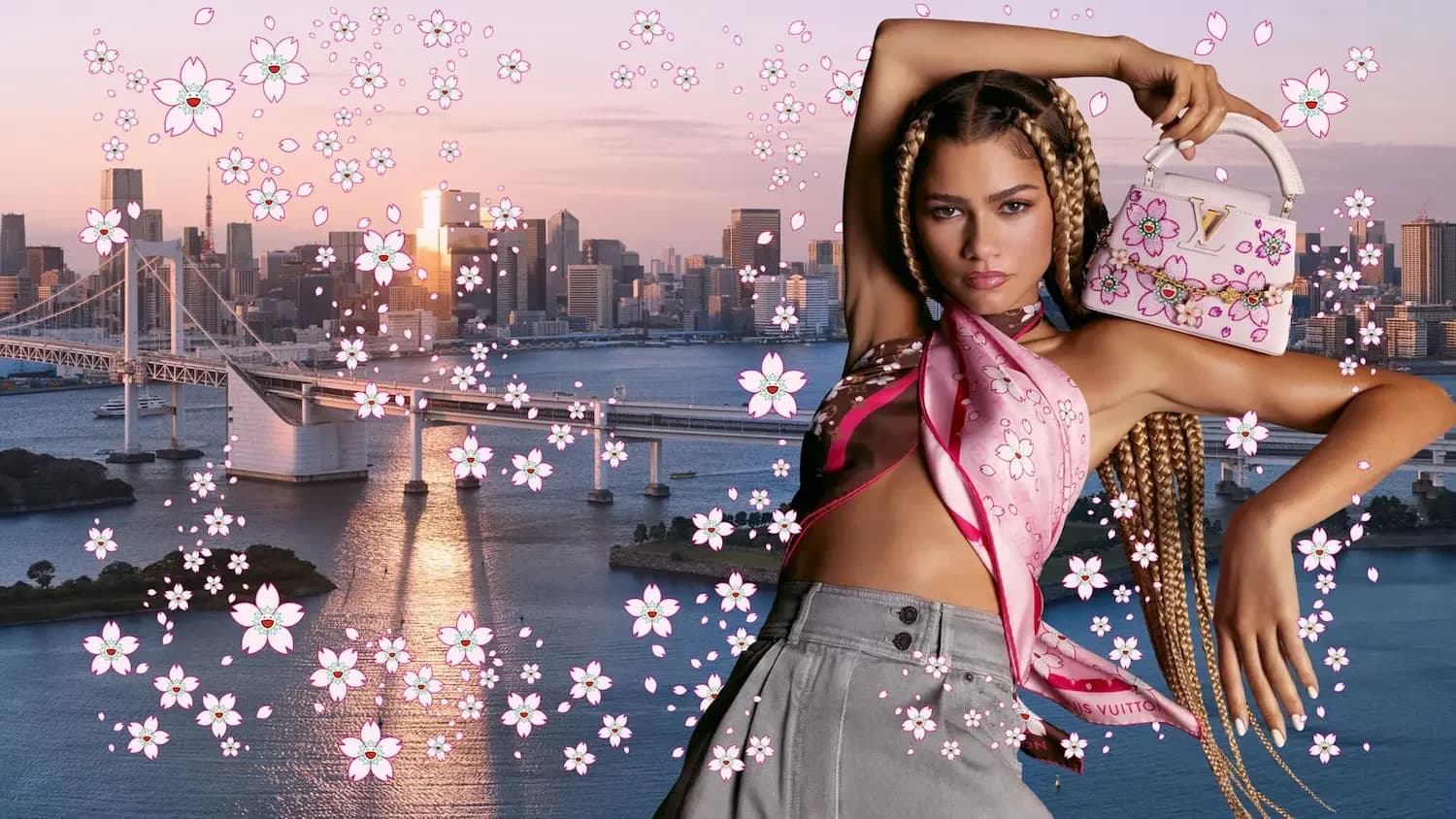
Zendaya is one of the more compellingly argued Type 9s in current public life, and what makes her particularly interesting for the type is how visible the pattern is given how considerable the platform. The quiet steadiness in interviews - the deflection of the spotlight, the consistent redirecting of attention toward the work, the collaborators, the causes rather than toward herself - is recognizably Nine in its texture. So is the way she inhabits very different creative spaces with a quality of complete absorption that suggests genuine merging with the material rather than performance of it: Rue in Euphoria, Chani in Dune, Tashi in Challengers - each one fully inhabited, each one somehow not quite diminishing the sense that the person underneath is still, somehow, harder to locate than the characters she plays.
The Nine's growth edge is claiming their own space, their own voice, their own desire without packaging it as service to something else - and there is something instructive in watching someone with Zendaya's reach choose, consistently and deliberately, to use it in ways that are oriented outward. Whether that is the Nine's accommodation or the Nine's growth, or both simultaneously, is exactly the kind of question the type makes genuinely difficult to answer. Other public figures often typed as Type 9 include Audrey Hepburn, whose humanitarian work in her later years had a quality of genuine self-transcendence that is distinctly Nine at their most developed, and Keanu Reeves, whose particular quality of unhurried, unpretentious presence reads as one of the more authentic Nine expressions in public life. The usual caveats apply.
How Enneagram Type 9 compares to nearby types
For the full picture of where Type 9 sits in the system, the Psychdom guide to all nine Enneagram types is the best starting point. The quick reference guide is useful for a faster comparative read.
Type 9 sits in the body triad alongside Enneagram Type 8 and Enneagram Type 1. All three types are fundamentally oriented around anger and the instinctive response to a world that does not always accommodate their needs - but they handle it in radically different ways. Type 8 expresses anger directly and immediately. Type 1 controls and redirects it into the inner critic and the drive for improvement. Type 9 forgets it - suppressing it so thoroughly that the Nine can genuinely be unaware that it is there, which does not make it go away but does make it considerably more difficult to address. The anger surfaces eventually, in Nines who have gone along with one too many things they did not actually want - quietly, stubbornly, and at a moment that tends to surprise everyone, including the Nine.
Frequently asked questions about Enneagram Type 9
Are Type 9s really that easygoing or are they just avoiding conflict?
Both, and the proportion shifts depending on health and circumstance. A Nine at their best genuinely does have a spacious, accepting quality that is not performance - they really do find it easier than most types to be with what is rather than what should be. A Nine who is running the avoidance pattern more than the acceptance pattern is doing something that looks identical from the outside and feels quite different from the inside - a flatness rather than a peace, a going-along rather than a choosing.
Why do Type 9s not know what they want?
Because wanting something requires believing that your preferences are worth expressing and worth taking up space in the world, and for a Nine who learned early that their presence was not particularly significant, this belief can be genuinely unavailable. The not-knowing is not laziness or indecision. It is the accumulated effect of years of practicing not knowing as a way of keeping the peace.
Do Type 9s get angry?
Yes, and the anger can be considerable when it finally surfaces, precisely because it has been accumulating quietly for so long. The Nine's relationship with anger is not the absence of it but the suppression of it - a suppression so thorough that it often bypasses the Nine's conscious awareness entirely. The anger tends to come out as stubbornness, as passive resistance, as the quiet but comprehensive refusal to engage with something they have finally decided they are done accommodating.
What is the difference between a Type 9 and someone who is simply introverted?
Introversion is a temperament - a preference for internal processing and a tendency to find social environments draining. Many Nines are introverted, but introversion alone does not make a Nine. What distinguishes the Nine is the specific motivational structure: the orientation toward peace and harmony, the merging with others' agendas, the disappearance of their own preferences not through preference but through the long practice of setting them aside in service of not making things difficult.
What does a healthy Type 9 look like?
Someone who is present - fully, specifically, recognizably present - rather than merged into the background of their own life. Someone who knows what they want and has found a way to say so without it feeling like a declaration of war. Someone whose peace is self-generated rather than contingent on the absence of conflict, which means it is available even when things are hard. Someone who has discovered that taking up space is not an imposition on the people who love them but the thing those people have been waiting for - and who has stopped making everyone else comfortable at the cost of never quite arriving in their own life.