
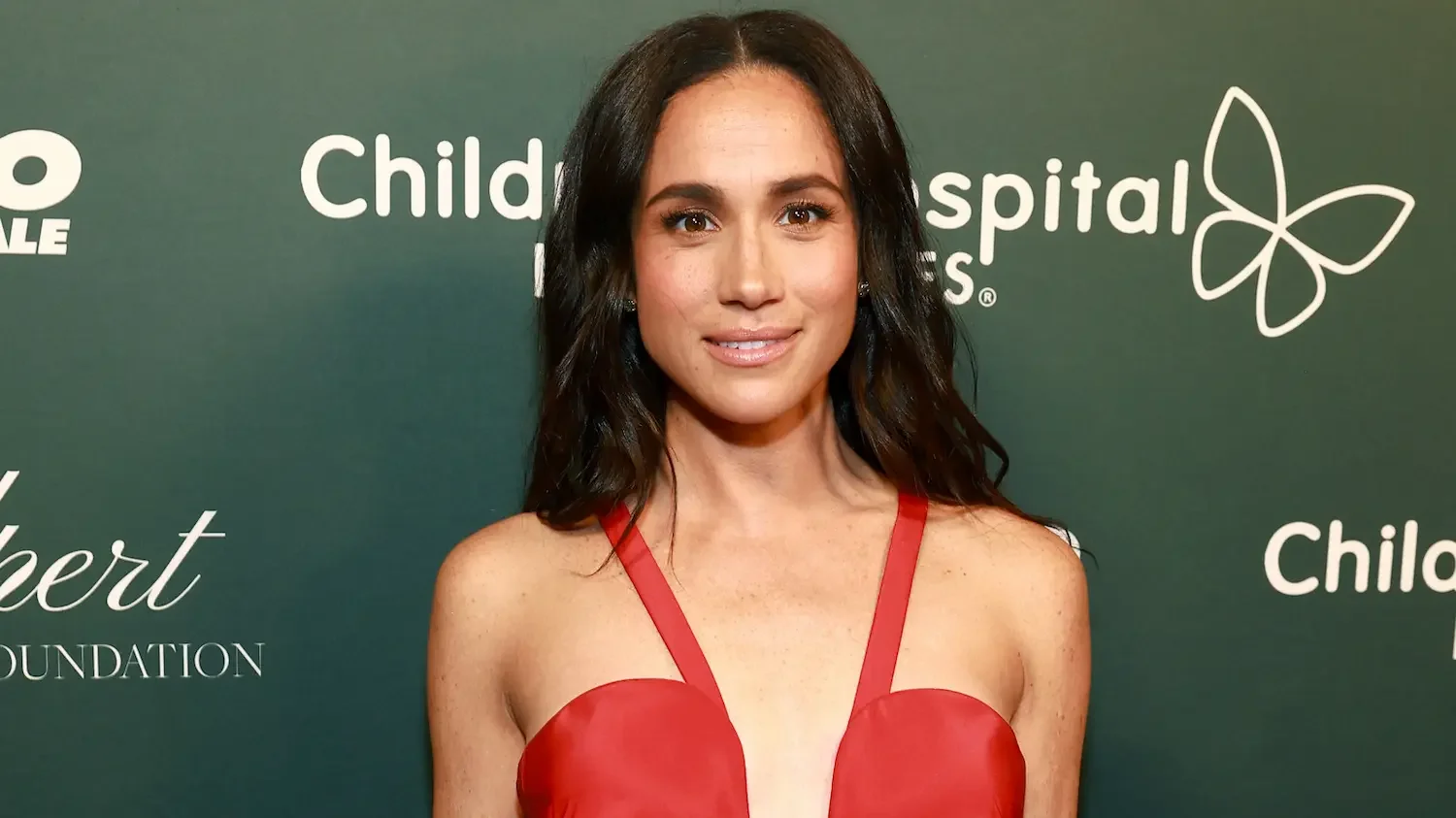
Meghan, Duchess of Sussex, appeared at Sydney’s Her Best Life retreat in April 2026. The event offered a ready-made celebrity tableau: a luxury coastal hotel, wellness programming, a gala conversation and VIP packages that included a group photograph.
It is tempting to use a public event like this to diagnose Meghan’s ambition, marriage, childhood or private need for attention. That would turn media criticism into amateur clinical fiction. A more defensible psychological question is not “What is wrong with her?” but “Why do audiences feel that curated celebrity material lets them know who she really is?”
The 30-second answer
Celebrity reinvention combines ordinary self-presentation with commercial storytelling at unusual scale. Meghan’s retreat appearance, lifestyle products and media work offer evidence about public positioning—not a clinical window into her personality or marriage. Audiences fill that gap through parasocial connection, prior beliefs and debates about authenticity. The same polished image can therefore look aspirational to one person and calculating to another, even though neither interpretation proves a private motive.
What actually happened in Sydney?
The event organizer’s page advertised the Her Best Life retreat for 17–19 April 2026 at InterContinental Sydney Coogee Beach. Programming included a conversation with Meghan, yoga, sound healing, a coaching session, meals and a disco. Standard twin-share tickets were listed at AU$2,699 and solo VIP packages at AU$3,199.
Meghan participated in an in-person conversation on 17 April. Those facts can support discussion of luxury wellness, celebrity access and brand positioning. They cannot establish whether she felt secure, wounded, narcissistic, strategic, fulfilled or anything else privately.
The old version of this article crossed that line. It assigned attachment patterns, narcissistic injury, Big Five traits, childhood dynamics and marital motives to Meghan and Prince Harry from public appearances. Those claims have been removed because psychological vocabulary does not become evidence merely by sounding sophisticated.
What is celebrity reinvention?
Reinvention is a change in the public story: actor to royal, working royal to media producer, interview subject to lifestyle entrepreneur, or any other shift in role and audience. It can involve new products, visual language, collaborators and explanations of continuity with the past.
Strategic does not automatically mean false. People routinely select clothing, stories and settings appropriate to a role. A founder wants a launch to feel coherent; a speaker wants an audience to understand why they are there. The scale and commercial stakes differ in celebrity culture, but curation itself is ordinary social behavior.
The useful critical questions are observable:
- What claim is being made?
- Who is the intended audience?
- What is being sold: a product, access, authority, belonging or a way of life?
- Which parts of the story are documented, and which are audience inference?
- How does scarcity or exclusivity affect value?
- Can criticism address the offer without inventing a diagnosis?
These questions preserve room for sharp analysis without pretending to read a stranger’s mind.
Why does polished self-presentation trigger suspicion?
Audiences often say they want authenticity, but public communication is always selected. A candid photograph is still chosen. An intimate story has an audience. A minimalist kitchen can be both genuinely enjoyed and commercially useful.
The friction arises when presentation wants the emotional authority of intimacy while retaining the control of advertising. Viewers may feel invited into a personal world but unable to test what is missing. That gap can create warmth, skepticism or both.
Psychologists use impression management or self-presentation to describe efforts to influence how others see us. It is not a pathology. A systematic review of online self-presentation research found that different forms of presentation were associated with different personality and mental-health variables, but the evidence did not license diagnosing individual users from curated posts.
For Meghan, a public aesthetic of hospitality, care and aspiration is visible. Whether it perfectly represents private life is unknowable—and also not unusual. Brands offer a coherent slice, not a complete person.
What are audiences bringing to the image?
Public reactions are not generated by content alone. Meghan sits at the intersection of unusually charged stories about monarchy, race, gender, nationality, class mobility, marriage, motherhood, media treatment and commercial celebrity.
A viewer who sees her primarily as someone mistreated by institutions may interpret a new venture as recovery and agency. A viewer who sees royal status as a public trust may interpret the same venture as monetized prestige. Others respond to the products, price or aesthetic with little interest in the royal argument.
This does not mean all interpretations are equally supported. It means that criticism should distinguish:
- fact—the event, price, product or public statement;
- interpretation—what the public move communicates;
- speculation—what a person privately feels or why a marriage exists.
Most damaging celebrity psychology jumps from the first to the third and presents the leap as expertise.
How do parasocial relationships intensify judgment?
A parasocial relationship is a one-sided connection with a media figure. Repeated exposure and personal disclosure can create familiarity, trust or dislike even though the relationship is not reciprocal. The APA Dictionary of Psychology emphasizes that such relationships can resemble social connection while lacking mutual development and awareness.
Parasocial experience is not inherently unhealthy. It can provide enjoyment, inspiration, identity exploration and a sense of company. It can also encourage an illusion of privileged knowledge: “I have watched enough interviews to know what she is really like.”
Negative parasocial attachment matters too. Following a public figure in order to criticize every outfit, expression or project can create a relationship organized around contempt. Engagement systems do not care whether attention is affectionate or hostile; both keep the figure central.
Current research increasingly treats parasocial engagement as mixed rather than universally harmful. A 2026 meta-analysis of influencer relationships found associations with both positive and negative mental-health outcomes and stressed the importance of context and study design. That evidence concerns groups, not a diagnosis of any fan or critic. See Bhatia and colleagues’ review.
Can we infer Meghan and Harry’s relationship dynamics?
Not responsibly from public material.
Attachment anxiety, avoidance, neuroticism and narcissistic injury are psychological constructs, not adjectives to decorate gossip. Assessing them requires valid measures, context and, for clinical conclusions, direct professional evaluation. A spouse looking tense in a photograph or discussing a grievance in an interview does not meet that standard.
Public couples also perform roles together. Joint appearances can be affectionate, strategic, awkward or all three. Editing, selection and audience expectation make a thin slice even thinner.
It remains possible to discuss themes without assigning traits. For example, celebrity couples manage boundaries between disclosure and privacy, individual and joint brands, family protection and public access. Those are real communication dilemmas. Claiming which partner “needs refuge” or “needs narrative control” is invented interiority.
A better way to read celebrity psychology
Use public culture as a mirror for general questions rather than as a remote assessment.
Instead of asking whether Meghan is authentic, ask:
- What signals make any brand feel authentic to me?
- When does curation feel like care, and when does it feel manipulative?
- Does a high price change my moral judgment of a wellness message?
- Which public figures receive more permission to reinvent themselves?
- Am I evaluating a claim, or rewarding my prior view of the person?
That approach produces insight the reader can actually verify. It also prevents clinical language from becoming a socially acceptable form of insult.
Frequently asked questions
Can we diagnose Meghan Markle from public behavior?
No. Public appearances and posts are curated material, not a clinical assessment. Diagnostic or trait claims would be unreliable.
What is celebrity reinvention?
It is a shift in public role, story, product or audience. It can be both strategic and sincerely connected to identity.
What is a parasocial relationship?
It is a one-sided sense of connection with a media figure. The experience may be meaningful, but it does not provide reciprocal access to the person.
Why is Meghan so polarizing?
Her public role activates existing conflicts about royalty, race, gender, class and celebrity. The same material is interpreted through different prior beliefs.
Is self-presentation fake?
Not inherently. Selection is part of communication. Criticism should focus on accuracy, omissions, commercial claims and impact rather than assuming a hidden disorder.
What happened at the Sydney retreat?
The April 2026 event combined a live conversation with Meghan, accommodation, meals, wellness sessions and social programming. Packages were advertised from AU$2,699.
Sources and research cited
- Her Best Life. (2026). Retreat with Meghan, Duchess of Sussex.
- American Psychological Association. (2026). Parasocial relationship.
- Twomey, C., & O’Reilly, G. (2017). Associations of self-presentation on Facebook with mental health and personality variables. Cyberpsychology, Behavior, and Social Networking, 20(10), 587–595.
- Bhatia, A., et al. (2026). Parasocial engagement with social media influencers and mental-health outcomes. Journal of Medical Internet Research.
This article analyzes public media and branding. It does not assess or diagnose Meghan, Prince Harry or their relationship.