
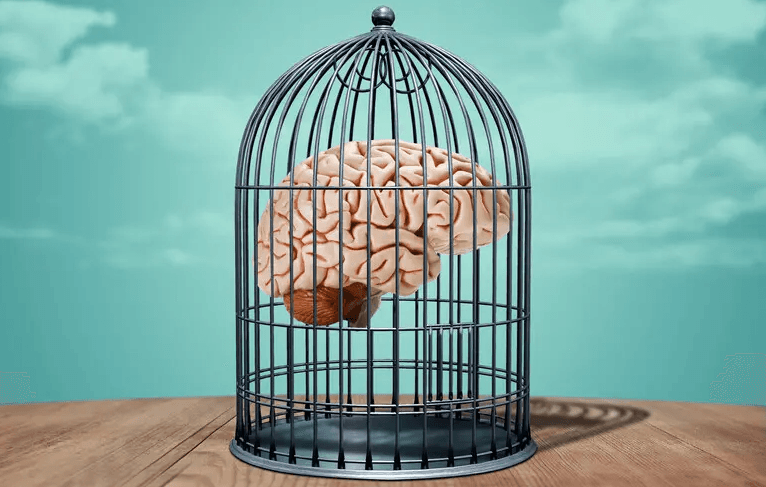
“Digital dopamine” is a catchy explanation for why scrolling can feel difficult to stop. It is also easy to misunderstand. Social media does not create a special kind of dopamine, every notification is not a measurable “dopamine hit,” and taking a weekend off does not detox the brain.
The useful idea underneath the phrase is reward learning. Likes, messages, novelty and personalized recommendations can teach us to check again, especially when the next outcome is uncertain. That can produce a powerful habit without proving that a person has an addiction or a damaged reward system.
The 30-second answer
Digital dopamine is not a medical diagnosis. It is shorthand for the way online rewards and cues can shape motivation and repeated behavior. Dopamine helps the brain learn what may be worth pursuing, but the evidence does not support claims that scrolling depletes dopamine or that a “dopamine detox” resets receptors. If social media feels out of control, focus on the behavior and its effects on your life—not on trying to cleanse a neurotransmitter.
In practical terms, ask three questions:
- What cue makes me open the app?
- What reward am I seeking: novelty, reassurance, connection, distraction or relief?
- What is the habit displacing: sleep, work, movement, conversation or recovery time?
Those questions are less dramatic than “Has my brain been hijacked?” They are also more likely to lead to a useful change.
What does dopamine actually do?
Dopamine is involved in movement, motivation, attention and learning. In reward learning, dopamine activity can help signal a reward prediction error: the difference between what was expected and what occurred. An unexpectedly positive outcome can strengthen the behavior that preceded it; a disappointing outcome can encourage the brain to update its expectations. Neuroscientist Wolfram Schultz’s review of reward prediction-error coding explains why dopamine is better understood as part of learning and pursuit than as a simple “pleasure chemical.”
That distinction matters online. You do not need to love every minute of scrolling for the checking habit to persist. Anticipation, uncertainty and the possibility of something socially relevant may be enough to prompt another swipe or refresh.
Researchers have found that visible social approval can engage reward-related processes. In an Instagram-style experiment, adolescents were more likely to endorse images that appeared to have many likes, and popular images produced greater activity in reward-related brain regions. The study used functional MRI, which measures changes associated with neural activity; it did not show a quantified burst of dopamine from every like. See Sherman and colleagues’ study of peer influence and likes.
Why can social media be so hard to put down?
No single feature explains everyone’s behavior. Several design elements can work together, and each person brings different motives, vulnerabilities and social needs.
Social feedback becomes a learnable reward
Likes, replies and shares turn social approval into visible, countable feedback. A large analysis of more than one million posts found that posting behavior followed patterns predicted by reward-learning models. An accompanying experiment also found that changing the rate of social rewards changed how quickly people posted again. The result supports a role for reward learning; it does not mean likes are pharmacologically equivalent to drugs. Read the Nature Communications study.
Uncertainty encourages checking
The next refresh might reveal a message, an entertaining video, upsetting news or nothing useful at all. When outcomes vary, people have another reason to sample the environment again. The habit can become attached to cues such as boredom, a notification sound, opening the laptop or reaching the end of a task.
Stopping requires an active decision
Infinite feeds, autoplay and rapid recommendations remove the natural stopping points found in a newspaper page, television episode or finished chapter. Continuing takes almost no effort; stopping requires noticing what is happening and choosing something else.
Personalization reduces irrelevant moments
Recommendation systems learn from viewing and interaction patterns. A feed that becomes better at predicting what will hold your attention can make disengagement harder. This does not prove that one platform is universally “more addictive” than another. The interaction between design, content, context and the individual matters more than a simplistic platform ranking.
Does social media hijack the brain?
“Hijack” is a metaphor, not a neuroscientific finding. Social media uses ordinary human capacities for social learning, curiosity and reward. Some of the brain regions involved in responding to social approval are also involved in other rewarding experiences. Overlap does not make two experiences biologically identical.
Comparing an app directly with cocaine or nicotine goes beyond the available evidence. Addictive substances have direct pharmacological effects, while social media is a complex behavior that may include conversation, entertainment, work, creativity, news and community. Some people experience serious loss of control; many do not.
A more precise phrase is problematic social media use. Researchers use it to describe patterns involving impaired control, persistent use despite harm and disruption to important areas of life. A 2025 clinical review notes that a standalone social media use disorder is not currently recognized in the major diagnostic systems. By contrast, the World Health Organization formally defines gaming disorder when gaming produces significant and persistent functional impairment.
What does the research say about mental health?
The honest answer is that the average picture is mixed, and individual experiences vary.
- A large 2019 analysis involving 355,358 adolescents found a negative but small association between digital technology use and well-being, accounting for no more than 0.4% of the variation. It was correlational, so it could not establish that technology caused lower well-being. See Orben and Przybylski’s study.
- An umbrella review of 25 reviews concluded that most described links between social media use and adolescent mental health as weak or inconsistent, although some reached more concerning conclusions. The authors emphasized differences in methods and interpretation. See Valkenburg, Meier and Beyens.
- Person-specific research found that the same type of passive social media use was associated with feeling better for some adolescents, worse for some and no different for many. See Beyens and colleagues.
- Experiments on taking breaks also produce different results. Deactivating Facebook for four weeks increased subjective well-being in one large randomized experiment, while a 2024 Gen Z experiment found broader benefits from restricting digital media but relatively few benefits from restricting social media alone. See Allcott and colleagues and Walsh and colleagues.
This does not mean “social media is harmless.” It means time alone is an incomplete measure. What someone sees, why they use it, whether use is active or passive, what it displaces, their age and their existing mental health may all affect the outcome.
Sleep is a useful example. Scrolling in bed may delay sleep because it occupies time, increases arousal or keeps the device within reach. You do not need a theory about depleted dopamine to decide that protecting sleep is worthwhile.
Myth versus evidence
Myth: scrolling depletes your dopamine
Dopamine is not a finite daily allowance that a person spends on videos and then runs out of. The brain continuously produces and uses it across many functions. Feeling flat after a long scrolling session may reflect fatigue, lost time, emotional contrast, overstimulation, poor sleep or disappointment. Those experiences are real, but they do not demonstrate dopamine depletion.
Myth: a dopamine detox resets your receptors
There is no established protocol showing that avoiding pleasurable activities for a few days resets dopamine receptors. A digital break can still be valuable if it interrupts cues, reveals an automatic routine or creates room for sleep and offline activity. The benefit is behavioral observation and habit change, not removal of dopamine.
Myth: short-form video is cocaine for the brain
Both can involve reward-related circuitry, but that broad overlap is not evidence of equivalence. Drugs act directly on neurochemical systems and can produce intoxication, tolerance and withdrawal through mechanisms that a feed does not reproduce in the same way. Sensational comparisons obscure the more useful question: is this pattern causing loss of control or meaningful harm?
Myth: everyone should delete social media
Social media can support relationships, identity exploration, creativity, professional communities and access to information. Complete abstinence may help some people, but it can also remove valued connections. The goal is not the smallest possible screen-time number; it is a pattern of use that serves rather than repeatedly displaces what matters.
Signs that your use may be becoming a problem
One long session is not enough to label a disorder. Look for a repeated pattern and its consequences:
- You open an app automatically and regularly stay longer than intended.
- Attempts to cut back repeatedly fail.
- Use displaces sleep, work, study, movement or face-to-face relationships.
- You continue despite recognizing a clear effect on mood, finances, safety or responsibilities.
- Not checking creates distress that feels difficult to manage.
- Scrolling has become your main way of avoiding uncomfortable thoughts or feelings.
These signs are prompts for reflection, not a self-diagnostic checklist. A clinician can help explore anxiety, depression, ADHD, loneliness, sleep problems or other factors that may be interacting with the behavior.
Try a seven-day attention experiment
Call it an attention experiment rather than a dopamine detox. The aim is to learn which changes improve your functioning.
Before you begin
Choose one app or behavior, not your entire digital life. Record a simple baseline for two ordinary days:
- approximate time spent;
- the situations that trigger checking;
- bedtime and sleep quality;
- one task or relationship that scrolling tends to displace; and
- how you usually feel before and after a session.
For seven days
- Turn off non-essential notifications from the chosen app.
- Remove it from the home screen or log out after each session to add a small amount of friction.
- Choose two or three planned check-in windows instead of relying on repeated impulse checks.
- Keep the phone outside the bedroom or beyond arm’s reach during the final hour before sleep.
- Decide on a replacement for the usual cue: a short walk, a saved article, music, stretching, a message to a friend or five minutes on the task you were avoiding.
- If you open the app automatically, notice the cue without treating the lapse as failure. Close it and continue the experiment.
At the end
Compare sleep, focus, mood and sense of control with your baseline. Keep the changes that produced a meaningful benefit. If nothing improved, that is useful information too: the problem may be a different app, the content you encounter, an unmet social need or something unrelated to screen time.
When should you seek professional help?
Consider speaking with a qualified health professional if digital use is causing significant distress, repeatedly interfering with daily responsibilities, worsening sleep or mental health, or feeling impossible to control. Support should address the whole context rather than assuming dopamine is the single cause.
If online content is connected with thoughts of self-harm or immediate danger, contact local emergency or crisis support now rather than relying on a digital detox.
Frequently asked questions
What is digital dopamine?
Digital dopamine is an informal phrase for the way digital experiences can engage motivation, anticipation and reward learning. It is not a diagnosis, a separate brain chemical or proof of addiction.
Does social media release dopamine?
Social feedback involves reward systems in which dopamine has an important role. But “every like causes a dopamine hit” is too precise for the evidence. Many social media studies measure behavior or reward-related brain activity rather than dopamine release itself.
Can scrolling deplete dopamine?
There is no good evidence that ordinary scrolling drains a finite dopamine supply. Focus on observable effects such as lost sleep, automatic checking and interference with daily life.
Does a dopamine detox reset your brain?
No proven detox protocol resets dopamine receptors. A deliberate break may still help you identify triggers and change a habit, which is a behavioral benefit rather than a neurological cleanse.
Is social media addiction a clinical diagnosis?
Social media use disorder is not currently a standalone diagnosis in the major diagnostic systems. Clinicians and researchers can still identify problematic use by examining impaired control, persistence despite harm and functional impairment.
How can I stop doomscrolling?
Identify the cue, add friction, create planned check-in windows and prepare a replacement activity. Test the changes for a week and judge them by improvements in sleep, attention, mood or control—not by whether you achieved a perfect screen-time number.
Research cited
- Schultz, W. (2016). Dopamine reward prediction error coding. Dialogues in Clinical Neuroscience, 18(1), 23–32.
- Sherman, L. E., Payton, A. A., Hernandez, L. M., Greenfield, P. M., & Dapretto, M. (2016). The Power of the Like in Adolescence. Psychological Science, 27(7), 1027–1035.
- Lindström, B., Bellander, M., Schultner, D. T., et al. (2021). A computational reward learning account of social media engagement. Nature Communications, 12, 1311.
- Orben, A., & Przybylski, A. K. (2019). The association between adolescent wellbeing and digital technology use. Nature Human Behaviour, 3, 173–182.
- Valkenburg, P. M., Meier, A., & Beyens, I. (2022). Social media use and its impact on adolescent mental health. Current Opinion in Psychology, 44, 58–68.
- Beyens, I., Pouwels, J. L., van Driel, I. I., Keijsers, L., & Valkenburg, P. M. (2020). The effect of social media on wellbeing differs from adolescent to adolescent. Scientific Reports, 10, 10763.
- Allcott, H., Braghieri, L., Eichmeyer, S., & Gentzkow, M. (2020). The Welfare Effects of Social Media. American Economic Review, 110(3), 629–676.
- Walsh, L. C., Regan, A., Okabe-Miyamoto, K., & Lyubomirsky, S. (2024). Does putting down your smartphone make you happier?. PLOS ONE, 19(10), e0306910.
- Moretta, T., & Wegmann, E. (2025). Toward the classification of social media use disorder. Addictive Behaviors Reports, 21, 100603.