Celebrity Synastry: Lily Allen and David Harbour

A pop relationship can be a fun mirror, but it can also be a surprisingly precise one. This is a respectful, entertainment-forward look at Lily Allen and David Harbour synastry, with an emphasis on the kind of relationship patterns that show up in real life, especially when stress is high and time is short.
If you have ever loved someone deeply and still found yourselves stuck in the same argument, this one is for you. Not because anyone “failed,” but because certain pairings highlight certain pressure points, and pressure points do not resolve themselves. They ask for rhythm, fairness, and repair.
A quick note before we begin
Birth times for Lily Allen and David Harbour are not reliably public. That means we cannot responsibly interpret rising signs, houses, angles, or house overlays as factual. We can still talk about sign-based dynamics and broad relational themes, and we can do it in a way that stays grounded and respectful.
Key Takeaways
Aries (Lily) and Taurus (David) can feel instantly compelling, but they often struggle with pacing and control.
One common trap is “talk now” versus “let me stabilize first,” which can become a pursue-withdraw loop.
Chemistry is not the hard part, fairness and follow-through are.
Repair is a skill, not a mood, and it can be practiced.
If you want the full breakdown, Read the full synastry report.
The data used (and what we cannot know)
Here is what this reading is based on, and what it intentionally avoids.
Public birth data (date and place): Lily Allen (May 2, 1985, London) and David Harbour (April 10, 1975, White Plains, New York).
Their public relationship timeline is referenced only at the level of broad dates, not private details.
We cannot know house placements, rising signs, or time-sensitive placements with certainty without verified birth times.
We also cannot know private causes of any breakup, even if headlines suggest narratives. This is a pattern-based lens, not a verdict.
Lily Allen and David Harbour synastry, Aries meets Taurus
There is a specific kind of magnetism when two signs sit next to each other. They feel close enough to recognize each other’s instincts, but different enough to stay fascinated.
Aries brings momentum. It is direct, fast-moving, identity-driven. Taurus brings steadiness. It is loyal, sensory, stability-driven. In a healthy rhythm, this can be gorgeous: one partner lights the match, the other keeps the flame steady.
The shadow shows up when speed starts to feel like pressure, and steadiness starts to feel like refusal.
The spark ⚡️and the anchor ⚓️
“In the report language, the vibe is “high voltage spark meets deep rooted flame.” That is a poetic way of saying: chemistry is not the problem. The problem is often what happens after the chemistry, when daily life demands consistency.
Aries often wants a relationship that feels alive, honest, and unconstrained. Taurus often wants a relationship that feels safe, predictable, and materially sane. Both are legitimate. Both can be non-negotiable.”
Different pacing, same longing
One of the most relatable tensions in Aries-Taurus pairings is this: both want devotion, but they time it differently.
Aries devotion looks like immediacy, pursuit, action, let’s fix it now.
Taurus devotion looks like continuity, loyalty, calm tone, show me you are staying.
You can see how easily this becomes misread. Aries thinks, why are you not responding, do you even care. Taurus thinks, why are you pressing me, do you respect my nervous system.
Sexual chemistry, fire meets velvet 🔥
This is the part many Aries-Taurus couples get right, at least early. Aries brings chase and heat. Taurus brings presence and sensuality. Together it can be addictive, because one partner energizes and the other deepens.
But the same difference that makes chemistry exciting can make intimacy complicated under stress. Aries can interpret slow as rejection. Taurus can interpret urgency as being used or rushed. The fix is rarely “more effort.” It is pacing agreements, consent language, and repair after conflict so the body stops bracing.

One part of this story that has turned into a full internet scavenger hunt is the idea of an “open” arrangement. In celebrity land, “open” can sound modern, chill, evolved, until you zoom in on the fine print. The structure only works when the rules are explicit, mutual, and continuously renegotiated, otherwise one partner gets “freedom” while the other gets the unpaid job of swallowing discomfort and performing cool.
When boundaries get blurry, openness stops feeling sexy and starts feeling like a loophole, which is exactly why online chatter grabs onto symbols and turns them into evidence. “Pussy Palace” is a perfect example: whether it was a shared in-joke, a private space, or simply a lyric-device designed to dramatise betrayal, it functions as the same archetype, the moment someone realises they were not actually on the same page.
Communication, speed vs steadiness
Aries communicates to move energy toward resolution. Taurus communicates to protect stability and reduce disruption. If neither adapts, you get a loop:
Aries pushes harder, gets sharper, wants clarity now.
Taurus goes quiet, delays, withdraws, needs time to settle.
In public-facing relationships, there is an extra layer. When visibility becomes a “third presence,” communication can start to orbit schedules, reputation, and whose needs get prioritized. Even deeply loving couples can quietly reorganize around public pressure until the relationship feels more like management than intimacy.
Get your own Relationship Astrological Chart here:
Where it gets hard (the pattern, not the blame)
This is where the reading becomes useful for everyone, famous or not.
Under stress, Aries energy often moves toward pursuit: talk now, fix now, reassure me now. Taurus energy often moves toward shutdown: let me stabilize first, then I can talk. Neither strategy is “bad.” Both are protective.
The problem is the loop. Pursuit makes shutdown stronger. Shutdown makes pursuit sharper.
If you want a deeper explanation of this exact dynamic, read: The Pursue-Withdraw Cycle (Anxious-Avoidant Trap)
A practical reframe that helps: the pursuer is often chasing connection, not conflict. The withdrawer is often chasing safety, not distance. When both believe they are the only one protecting the relationship, the tone hardens. Then you are no longer solving the issue, you are solving the alarm.
The repair plan
Repair is not a vibe. It is a sequence. Here are five moves that help Aries-Taurus couples, and honestly most couples, get out of the same fight.
Name the pace difference out loud. “I want to talk now, you need ten minutes. Let’s do ten, then we come back.”
Set a “return time,” not an open-ended break. Taurus calms faster when there is structure. Aries panics less when there is certainty.
Use one sentence of reassurance before content. “I’m here, I’m not leaving, I just need a moment.”
Trade clarity for kindness. Aries, ask one clean question. Taurus, answer one clean question. Keep it small.
End with a concrete micro-agreement. One action in the next 24 hours that proves repair happened.
If your fights feel like anxiety spikes rather than disagreements, this may help too: Relationship Anxiety vs Anxious Attachment.
The ‘ambitious wife’ note: spark vs anchor
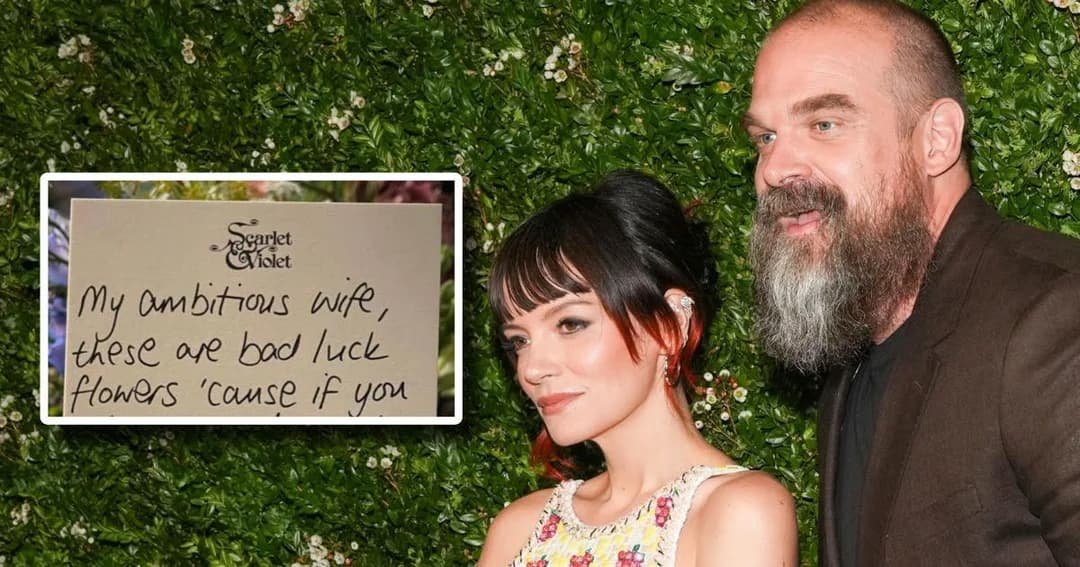
A note that’s been widely recirculated from that era includes the phrase “my ambitious wife” and jokes about him being “miserable” if she’s reviewed well. It may have been meant as teasing, it may have been a private style of humour, we cannot know. But as a public artefact, it’s doing something fascinating: it’s becoming a Rorschach test for how we read support in relationships. When one partner is stepping into visibility, the other partner’s job is not to shrink themselves. It’s to stay connected while the room gets brighter. That is the difference between an anchor that steadies a spark, and an anchor that starts to feel like weight.
In synastry language, this pairing gets described as spark meeting flame: Aries momentum against Taurus steadiness. At best, Taurus makes the fire sustainable. Aries makes the bond feel alive. Under stress, though, Aries can push harder for closeness while Taurus pulls back to regain calm, and suddenly “support” sounds like pressure, or like a subtle put-down.
The pop culture mirror
Lily Allen and David Harbour’s relationship was widely reported as beginning in 2019, with a marriage in September 2020, and a separation reported in early February 2025.
We do not need private details to name a universal truth: when external pressure rises, couples either get more intentional, or they get more reactive. Fame can compress time, intensify scrutiny, and turn small differences into “identity” differences. In an Aries-Taurus pairing, that can look like a constant tug-of-war between autonomy and stability.
The most believable “astrology angle” here is not destiny. It is mismatch in pace, plus life pressure, plus a repair system that did not get enough oxygen.
A quick teaser: what changes with the next chapter
As of late 2025 and early 2026, Lily Allen has been publicly linked to Jonah Freud.
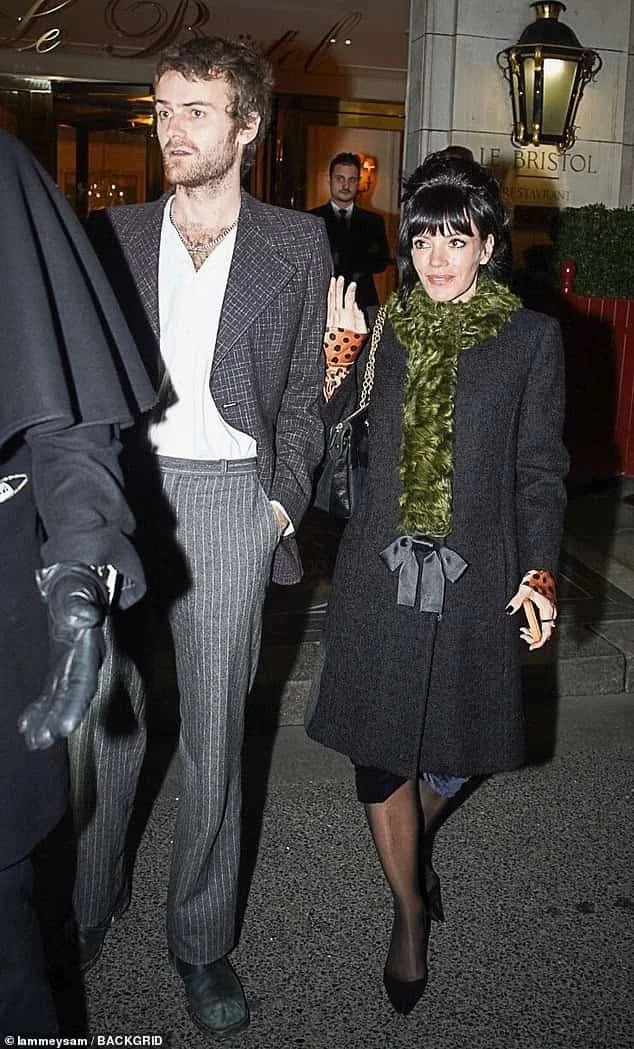
Without birth times (and without turning real people into a lab experiment), the only responsible takeaway is thematic: after a high-pressure chapter, many people shift toward a dynamic that feels simpler, quieter, or more privately anchored. Sometimes the “next chapter” is less about who the person is, and more about how the relationship is structured.
Try this on your relationship 💬
When I feel rushed, what do I start believing about you?
When I feel ignored, what story do I tell myself, and what is the kinder story?
What does “reassurance” look like to me, words, time, touch, or action?
What is my shutdown signal, and what is my pursuit signal?
What is one repair phrase I can say that I will not regret later?
If we had to solve this in 10 percent smaller, what would we change first?
FAQ
What is Lily Allen and David Harbour synastry?
It is a symbolic compatibility reading based on publicly available birth data, focused here on Aries and Taurus dynamics, plus the real-world patterns couples get stuck in.
Are Aries and Taurus compatible long term?
They can be, especially when they build pacing agreements and share power fairly. Chemistry is common. Consistency and repair are the make-or-break pieces.
What is the pursue-withdraw cycle?
It is a conflict loop where one partner pursues closeness through urgent discussion, while the other protects themselves by withdrawing or shutting down. The loop escalates unless you add structure and reassurance.
How do you break the anxious-avoidant trap?
Start with timing (pause and return), then add reassurance, then go small and concrete. Do not try to solve the entire relationship mid-spiral.
What are repair attempts in a fight?
They are bids to soften tension and reconnect, like “Can we restart,” “I hear you,” or “I’m getting defensive, can you say that another way?”
What if one partner shuts down during conflict?
Treat shutdown as a nervous-system event, not a moral failure. Use a short break with a return time, and restart with reassurance before content.
Can astrology explain a breakup?
Astrology can describe themes and friction points, but it cannot prove causes. Public breakups are multi-factor, and private details are not ours to claim.
What matters more than “compatibility” for long-term love?
Fairness, shared meaning, and consistent repair. Most couples do not break from one fight, they break from unrepaired fights.
Get your own Relationship Astrological Chart (compatibility report) by hitting the button below:
References
A) In-text citations used throughout article
(Bowlby, 1969)
(Hazan & Shaver, 1987)
(Christensen & Heavey, 1990)
(Rusbult, 1980)
(Mikulincer & Shaver, 2016)
(Gottman, n.d.)
B) References (with verified URLs and DOI if available)
Bowlby, J. (1969). Attachment and Loss: Vol. 1. Attachment.
URL: https://archive.org/details/attachmentlossvo00johnHazan, C., & Shaver, P. R. (1987). Romantic love conceptualized as an attachment process. Journal of Personality and Social Psychology, 52(3), 511–524.
DOI: 10.1037/0022-3514.52.3.511
URL: https://doi.org/10.1037/0022-3514.52.3.511Christensen, A., & Heavey, C. L. (1990). Gender and social structure in the demand/withdraw pattern of marital conflict. Journal of Personality and Social Psychology, 59(1), 73–81.
DOI: 10.1037/0022-3514.59.1.73
URL: https://doi.org/10.1037/0022-3514.59.1.73Rusbult, C. E. (1980). Commitment and satisfaction in romantic associations: A test of the investment model. Journal of Experimental Social Psychology, 16(2), 172–186.
DOI: 10.1016/0022-1031(80)90007-4
URL: https://doi.org/10.1016/0022-1031(80)90007-4Mikulincer, M., & Shaver, P. R. (2016). Attachment in Adulthood (2nd ed.): Structure, Dynamics, and Change. Guilford Press.
URL: https://www.guilford.com/books/Attachment-in-Adulthood/Mikulincer-Shaver/9781462533817Gottman Institute. (n.d.). The Four Horsemen: Criticism, Contempt, Defensiveness, and Stonewalling.
URL: https://www.gottman.com/blog/the-four-horsemen-recognizing-criticism-contempt-defensiveness-and-stonewalling/People. (n.d.). David Harbour and Lily Allen’s Relationship Timeline.
URL: https://people.com/tv/david-harbour-and-lily-allen-relationship-timeline/Harper’s Bazaar. (2025). Everything to Know About Lily Allen’s Boyfriend, Jonah Freud.
URL: https://www.harpersbazaar.com/celebrity/latest/a69842611/lily-allen-boyfriend-who-is-jonah-freud/